Restoring an older home is not the same trade as building new. Done right, it protects the home's character, your budget, and your timeline before a single wall comes down.
Most clients who call us about an older Salt Lake City home already know they want to update it. The real question is how much to change and how much to protect, and that answer starts with the house itself.
If you are still deciding whether your home needs full restoration or a renovation, we cover the difference between renovation and restoration separately. This guide assumes you are renovating an older home and focuses on what that actually takes.
The neighborhood tells us a lot before we walk through the door. A 1920s brick bungalow in the Avenues has different bones than a 1960s rambler on the East Bench, and each rewards a different set of moves:
Get that reading right and the house feels renewed. Get it wrong and it feels erased. That judgment is the whole job, and it is why an old house renovation in Salt Lake City is less about a fixed formula than about knowing which decade you are standing in.
For clients weighing a room-by-room approach against taking on everything at once, our whole house remodel work is usually where that conversation starts.
The right approach to an old house renovation in Salt Lake City depends on where it sits. Our neighborhoods were built in different decades and styles, and reading that correctly is the first thing we do.
How the older housing stock breaks down:
A Craftsman bungalow in the Avenues and a 1960s rambler on the East Bench are almost opposite projects. Knowing the difference before demolition is what keeps a renovation true to the house.
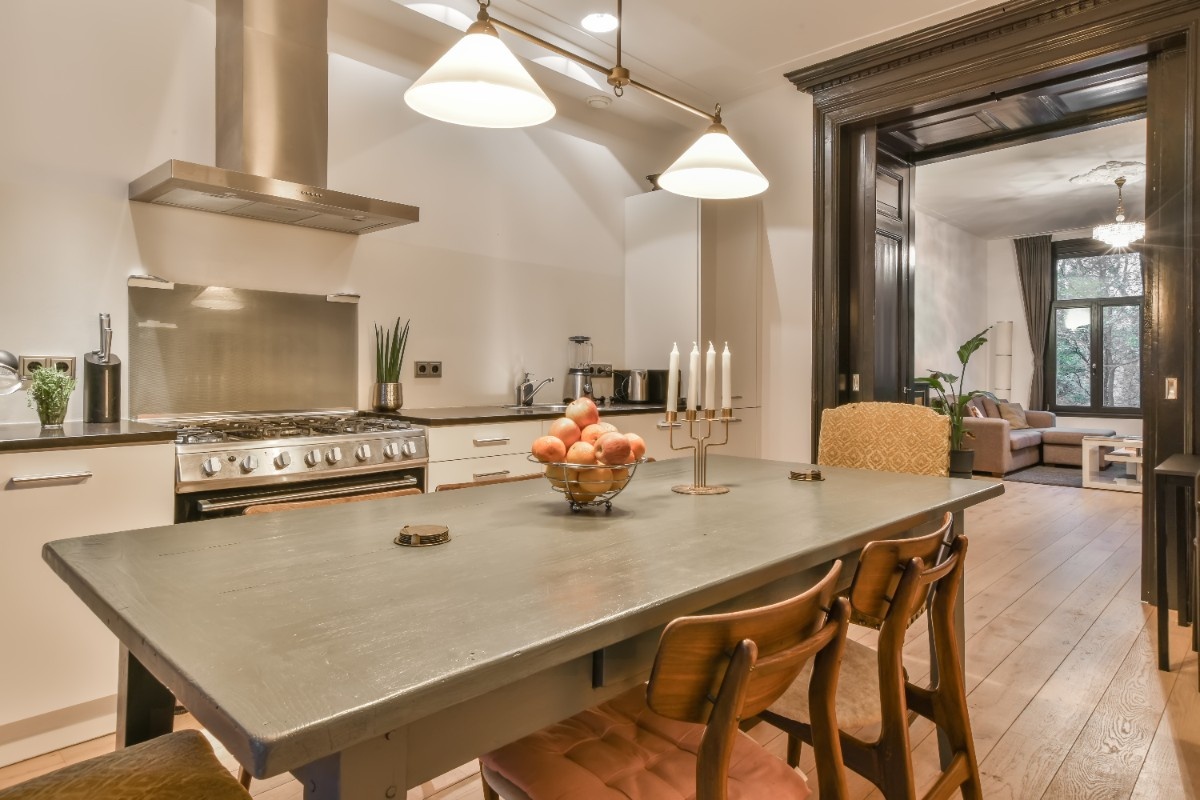
A mid century modern renovation almost always comes down to the same three problems. Once you know what they are, the decisions get easier.
Kitchens built before 1970 were designed as sealed-off rooms, walled away from the living space. That fit the era and fits almost nobody now.
Some of it is worth keeping. A lot of it reads as tired rather than as period-right, and telling the two apart is the skill.
The last thing that ages an old kitchen remodel is a set of finishes that argue with the home's architecture. We swap them for materials that read current but still belong to the house. The same logic drives every bathroom remodel we take on in an older home, where a dropped ceiling and an outdated vanity can age a room a full generation on their own.
"How do I remodel my older home without losing what makes it mine?" It is the question we field most, and our answer turns on condition, not sentiment.
Restoring original hardwood floors is often one of the highest-return decisions in the project, because no new floor quite matches the depth of decades-old oak underfoot. But we will always tell a client when a feature is past saving. Keeping something that should go does the house no favors, and it costs money that belongs elsewhere in the home.
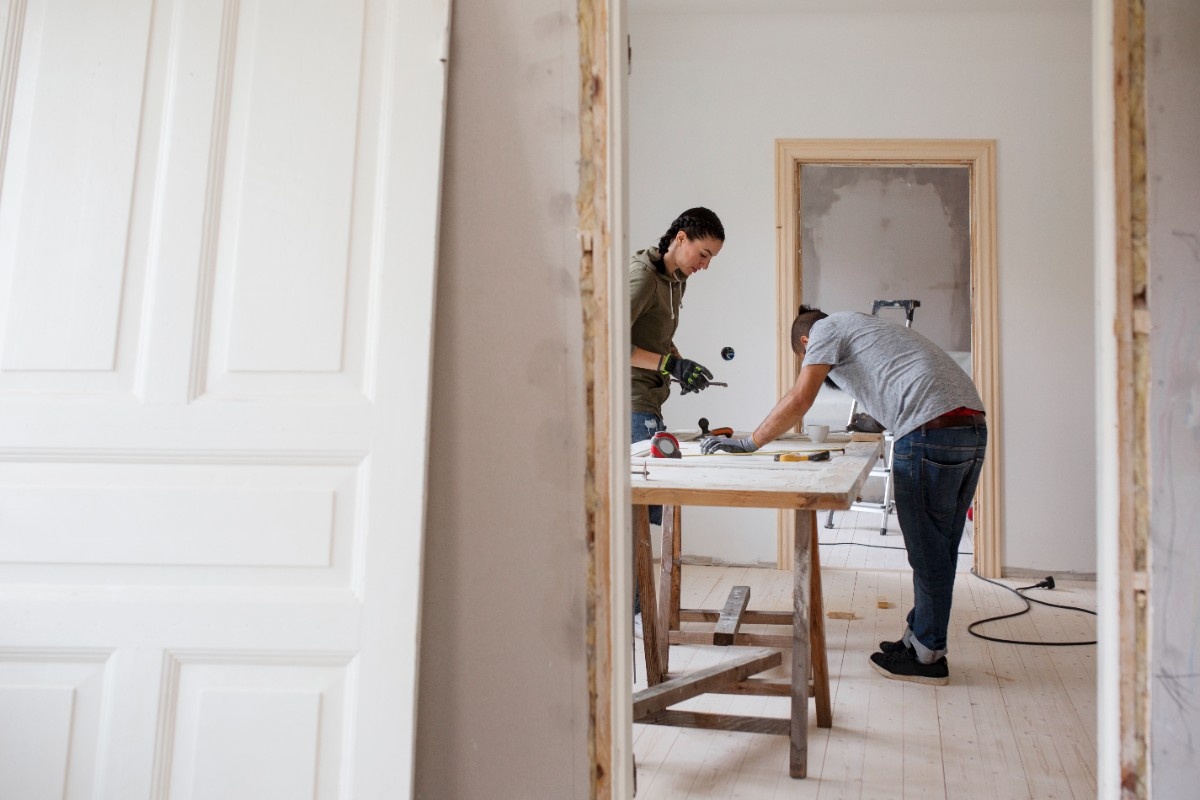
This is where an older-home project stops being about finishes and starts being about what is behind the walls. Pre-1970 construction in this valley carries a predictable set of surprises, and any honest home restoration in Salt Lake City accounts for them before demolition, not after.
The three we watch for most:
Behind the plaster-and-lath common to homes of this age, we routinely find all three at once. That is not cause for alarm. It is cause to plan, and to price the work honestly before a wall comes down. Removing a load-bearing wall in particular is the line item that separates a real structural restoration from a surface refresh, and it is where a lot of underbid projects come apart.
It is also why the cost to renovate an older home varies so much from house to house. Two homes on the same street can carry very different systems behind the plaster, and the wiring, plumbing, and structural work we find there drives the budget far more than the finishes a client picks at the end.
The failure we work hardest to avoid is the renovation that looks dropped in from another house. You know the look: a slab of glossy new finishes sitting inside a home that plainly predates them, everything at odds with everything else.
Knowing how to modernize an old house is mostly restraint. When we plan a mid-century update, we are checking a short list before a single finish is chosen:
Done right, a guest cannot tell you where the 1958 house ends and our work begins. They only know the home feels whole. That instinct runs through how we approach a home restoration in Salt Lake City, and clients can see the full arc of it in our design and build process.
We would rather a client say it than say it ourselves. Our client, Lorye S., wrote that we sided their home and renovated their 1952 kitchen, and that both jobs turned out exactly as they had pictured.
That project is this entire guide in miniature: an older Salt Lake City home, a kitchen built in a decade that no longer matched how the family lived, and a result that brought the space current without making it feel like it belonged to a different house. It is the kind of 1950s house renovation we take on precisely because we know what these homes need.
For most of the homes we see in Sugar House, the Avenues, East Bench, and Holladay, the answer is yes, and often emphatically.
These are well-built houses on established lots in neighborhoods people genuinely want to live in. The case for restoring one is straightforward:
The deciding factor is rarely the age of the house. It is condition, scope, and having an experienced team who will tell you the truth about both before the work starts. Whether it is worth renovating an old house comes down to that honest read, and it is the part we take most seriously. We would rather walk a client through a clear-eyed assessment up front than hand them a surprise halfway through demolition.
If you are weighing an old house renovation in Salt Lake City on a house that deserves it, we would be glad to discuss your ideas and look at it with you. Renovation Brothers has spent years bringing this valley's older homes current, one careful decision at a time. Contact us for a free estimate and we will give you a straight answer on what your home actually needs.
It depends on several factors including project scope, the extent of restoration work, and what we find behind the walls. Older homes carry more unknowns than newer construction, so we price the structural realities honestly up front rather than after demolition. A focused kitchen or bath restoration sits at one end of the range, a full whole-house restoration at the other.
For most older SLC homes in sound condition, restoration wins. You keep the character, the mature lot, and the established neighborhood, usually with less cost and disruption than a rebuild. The exception is a house with structural issues or moisture damage so extensive that starting over is genuinely more sensible, and we will tell you plainly if yours is one of them.
Often, yes. Homes built before 1970 frequently have knob-and-tube wiring or undersized panels that were never meant for modern appliance loads. We assess the existing system early, since it affects both safety and the renovation process of any kitchen or whole-house work.
Usually, though it depends on which walls are carrying the structure. Removing a load-bearing wall often means engineering changes and added scope. It is one of the most transformative changes we make to an older home, and one that has to be planned with expert guidance rather than improvised.
Restore them if there is enough thickness left to sand and refinish and the boards are sound. Restoring original hardwood floors is often one of the highest-return features to save, because no new floor matches the depth of decades-old oak underfoot. We replace only when the wood is too worn, water-damaged, or compromised to bring back.
Longer than the same work in new construction, because older homes hold surprises. Timelines depend on project scope, on how much structural repairs and electrical updating is needed, and on how much original material we are restoring versus replacing. We give clients a realistic schedule once we understand what the house is working with.
Yes. We manage all necessary permits as part of the renovation process, which matters more on older homes where electrical, plumbing, and structural changes trigger requirements a cosmetic refresh would not.

Begin your transformation with a free estimate from Renovation Brothers today!

Skilled home remodelers in Utah, creating personalized, high-quality renovations for every home.
License No.: 10884505-5501
Ready to start?
Request a quote


