Two floors dominate every bathroom we quote, and clients ask us to settle the same debate constantly. In Salt Lake City, the answer turns on what national guides ignore: some of the hardest water in the country.
Yes, with one real caveat. Modern luxury vinyl plank is fully waterproof, comfortable, and forgiving, but it will not match tile for lifespan or for high-output heated floors. For a busy household bath, that tradeoff is often worth making.
Luxury vinyl plank is a waterproof, rigid-core flooring that layers a printed wood-look surface over a dense, moisture-proof base. A luxury vinyl plank bathroom floor solves the problems that sink other materials in wet rooms.
The limits matter as much as the strengths.
This is the heart of the choice. Luxury vinyl plank vs tile is rarely about which material is objectively better; it is about matching the floor to how the room is used and how long you plan to own the home.
The gap is widest at installation and closes over the years you own the home.
At the high end of the Salt Lake and Summit County market, buyers read tile as the finished, forever choice. In a primary suite or a home you intend to list, porcelain signals quality in a way vinyl still does not, and that perception moves offers. In a secondary bath, the resale penalty for vinyl shrinks to near nothing.
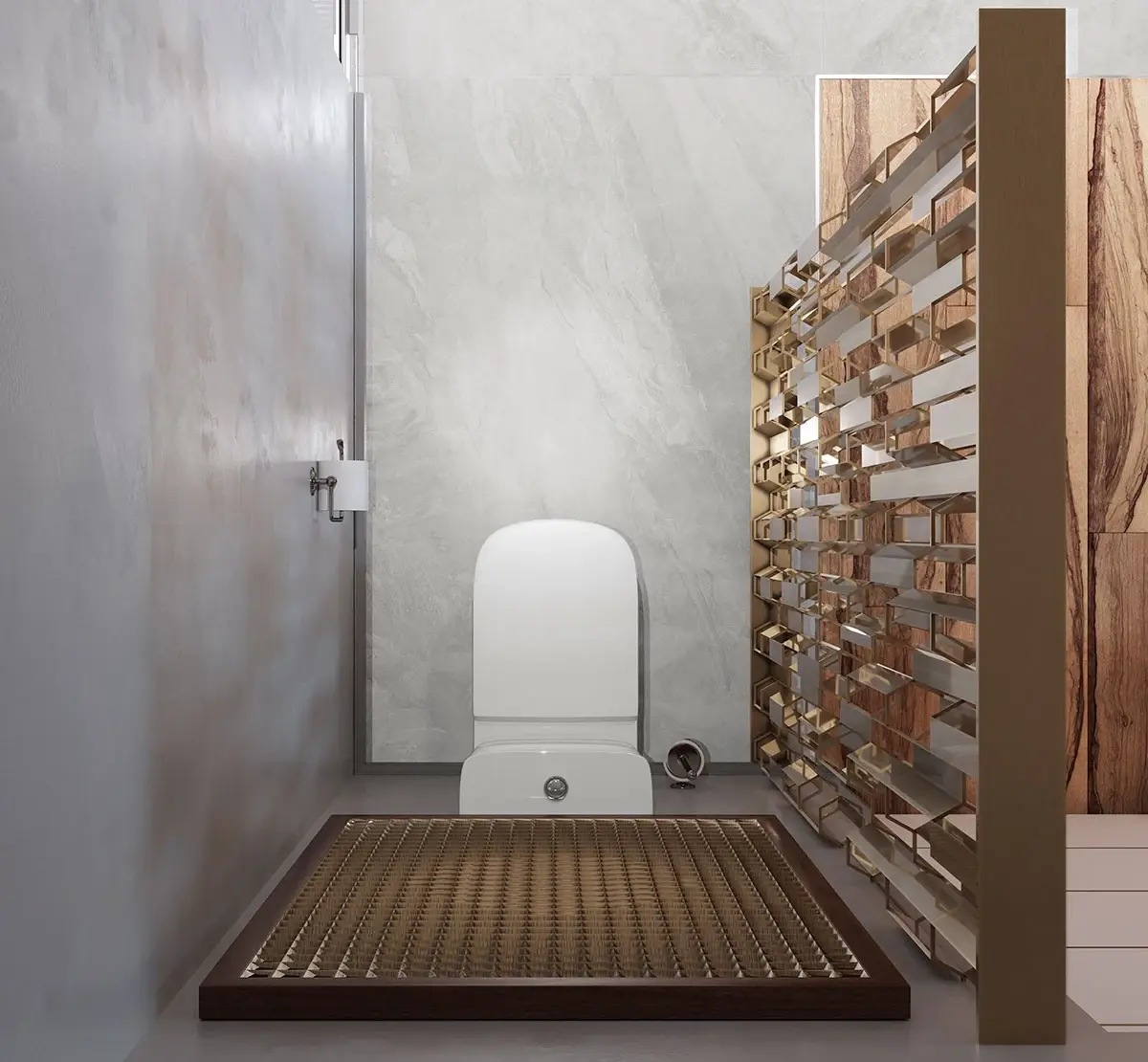
Tile is not the default you settle for. In the right room it is the stronger floor, and two advantages carry the argument.
A porcelain tile bathroom floor is the natural partner for high-output radiant heat, and this is where it pulls ahead of vinyl. Tile tolerates the higher temperatures a heating system can run at, while vinyl carries a surface-temperature ceiling of roughly 85 degrees that caps how warm the floor gets. Vinyl still works over radiant heat; it just delivers gentler warmth. If a heated floor is on your list, our bathroom flooring guide walks through the radiant systems we install and how they change the material math.
Choose tile for a primary bath, a long-term home, or any remodel driven by resale. The higher install cost buys a floor that outlasts the mortgage and reads as a lasting upgrade to the next buyer. For clients weighing a full renovation, our bathroom remodel services lay out how flooring fits the larger scope.
The material is only half the decision. What sits under it, and what it has to meet at the doorway, decides how either floor performs.
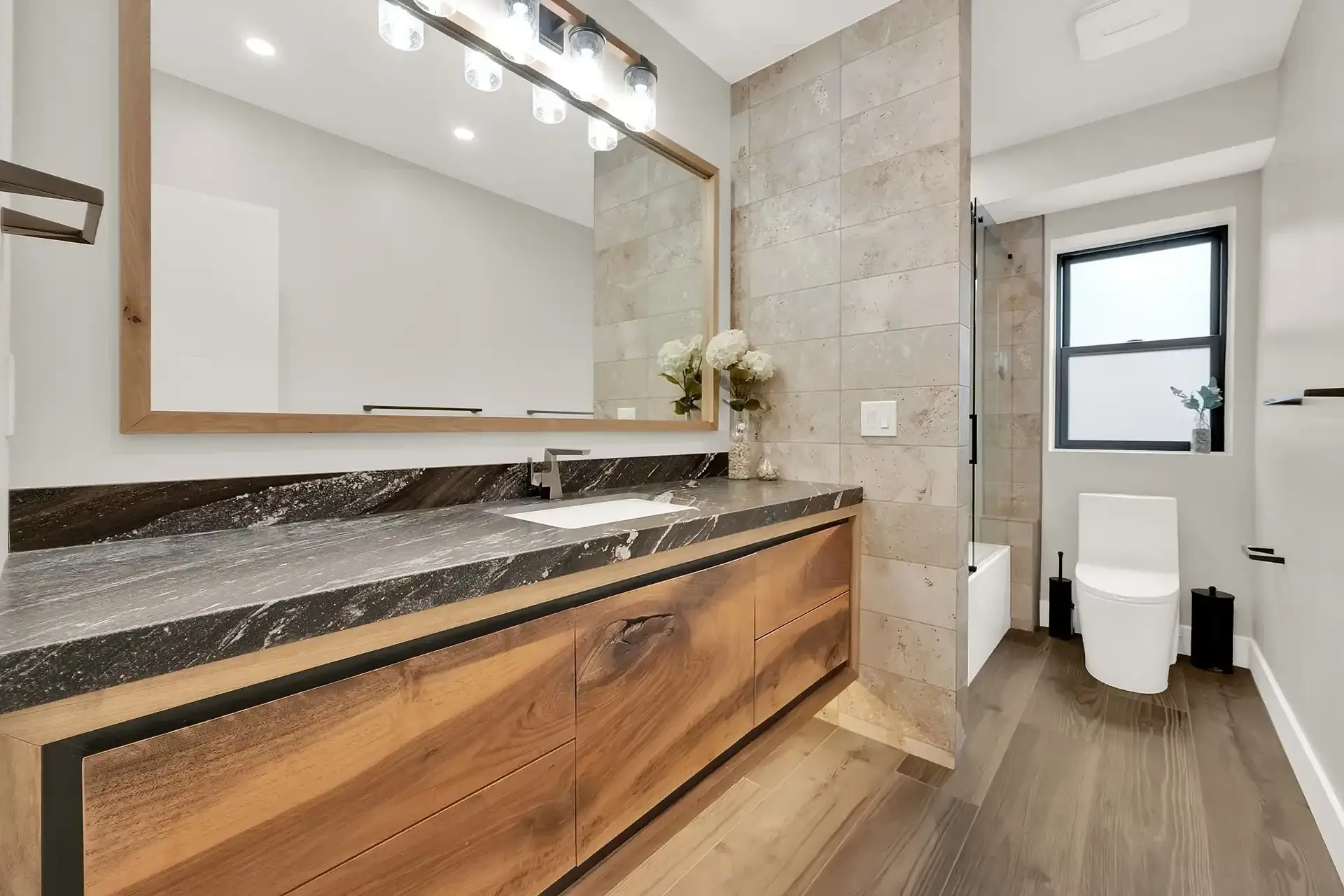
National flooring guides don't account for conditions like ours. Two Utah realities reshape the entire comparison.
Utah sits among the hardest water regions in the country, and mineral load punishes bathroom surfaces. On tile, that means scale building in grout lines and a cloudy film that dulls glazed and natural stone over time. Fixtures spot fast, and shower glass clouds within months without regular wiping. Vinyl shrugs off mineral deposits more easily, which counts in its favor for a hard-working family bath in Sugar House or Holladay.
Vinyl expands and contracts with heat and moisture, and in humid Gulf or Southeast markets that movement causes gaps and buckling. Our dry mountain air softens that problem. Waterproof bathroom flooring Utah homeowners install tends to sit more stably here than the same product would in a swampy climate, because the daily humidity swings that stress the seams simply are not as extreme.
Cold winters make heated floors a genuine demand driver, not a luxury. Clients in Park City and along the Cottonwood corridor ask for radiant heat more than anywhere else we work, and it often decides the material. A heated mountain bath points toward tile, since its higher temperature range beats vinyl's ceiling. The same logic runs through our mountain modern design guide, where climate drives the material before style.
Utah has the largest average household size in the nation, so a bathroom here often serves grandparents and grandchildren in the same week. That raises the stakes on slip resistance and safe, even footing. For families planning around aging in place, our accessible bathroom remodels cover the grab bars, curbless entries, and slip-rated surfaces that make a shared bath work for every generation.
The right floor depends entirely on the room, and any guide that names one universal winner is not being straight with you.
For the room that anchors the house and for any home headed to market, tile earns its premium.
Where resale pressure eases, luxury vinyl plank is the sound, comfortable choice.
None of these rooms carries the resale weight of a primary suite, so the trade is easy to make. If the primary bath is the room you are elevating, our spa bathroom remodel ideas show how flooring sets the tone for the whole space.
Every LVP vs tile bathroom floor decision comes down to the room and the hold. Put tile in the primary suite and any resale-driven remodel, and put vinyl in the secondary and guest baths where comfort and cost matter more than permanence. Utah's hard water and dry air only sharpen that logic, rewarding tile's durability up top and vinyl's stability everywhere else. When you are ready to match the right floor to the right room, contact us for a quote and our team will walk your space with you.
Neither wins outright. Tile is better for primary baths, resale, and heated floors, while luxury vinyl plank is better for secondary and guest baths where cost and comfort lead. Match the floor to the room.
Yes, but with tight limits. Many vinyl products carry a maximum surface temperature, often around 80 to 85 degrees, and exceeding it can void the warranty or damage the planks. Tile handles higher temperatures, so it delivers more warmth on the coldest days.
Luxury vinyl plank is cheaper to install in almost every case. It goes down faster, needs less subfloor prep, and skips the mortar and grout work tile requires. Tile costs more upfront but lasts longer, which narrows the gap over a long ownership.
It affects the look more than the tile itself. Hard water leaves mineral scale in grout and a cloudy film on glazed and stone surfaces, and it spots fixtures and glass quickly. Sealed grout and regular cleaning slow it, but the mineral load here is persistent.
Quality luxury vinyl plank with a rigid core is waterproof through the full plank, so surface water will not damage it. The seams and perimeter still need a proper install, because water pooling underneath can reach the subfloor. Installed correctly, it holds up in a full bathroom.
Porcelain tile adds the most in a luxury home, especially in the primary bath. High-end Salt Lake and Park City buyers read tile as the permanent, finished choice, and that perception supports stronger offers. Vinyl is fine in secondary baths where buyers expect it.
Luxury vinyl plank is usually the right choice. These rooms see lighter use and less resale scrutiny, so the warmth, quiet, and lower cost of vinyl outweigh tile's longevity edge. It is a practical choice with no real penalty in a lower-traffic bath.

Begin your transformation with a free estimate from Renovation Brothers today!

Skilled home remodelers in Utah, creating personalized, high-quality renovations for every home.
License No.: 10884505-5501
Ready to start?
Request a quote


