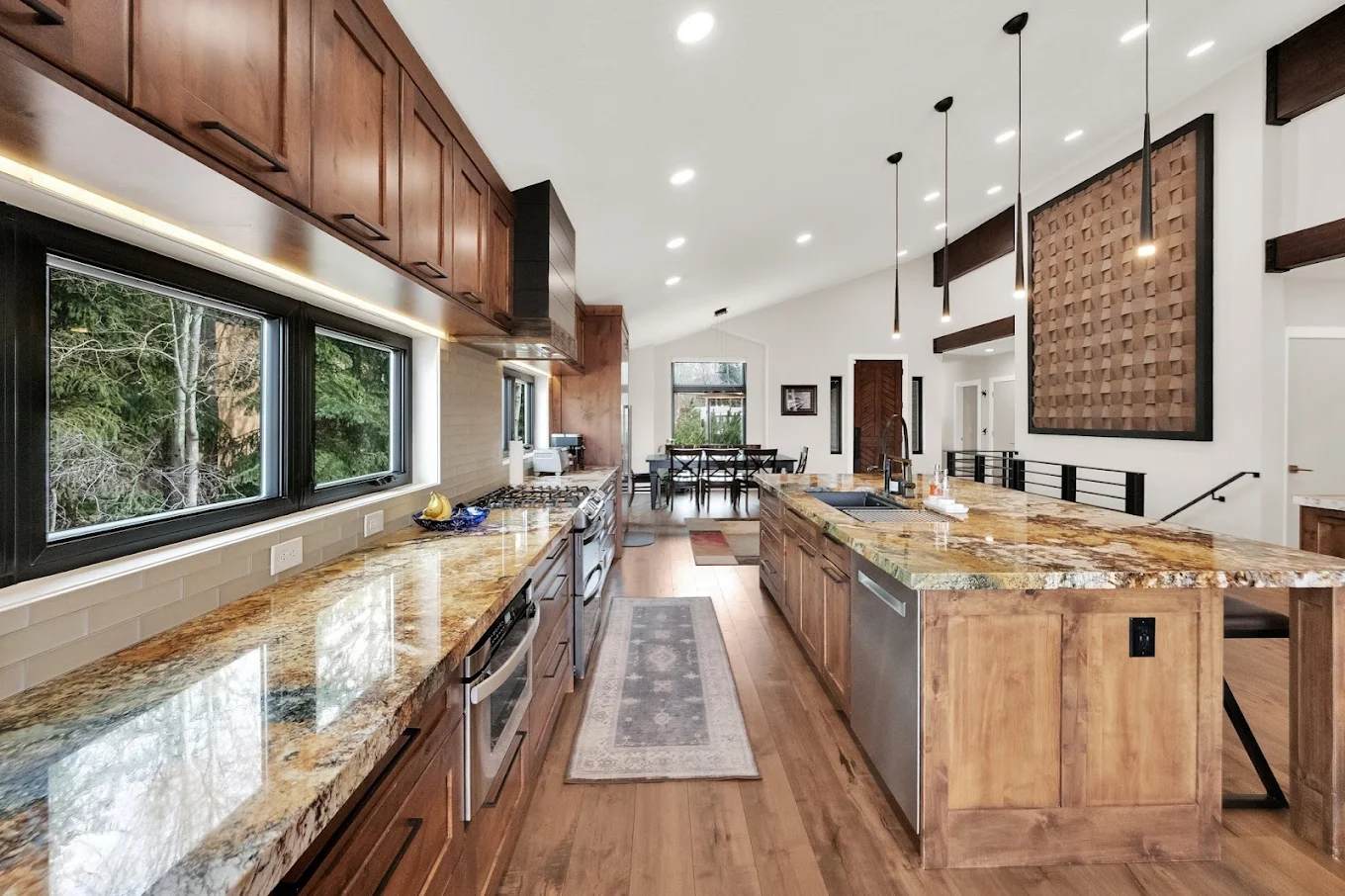
Real return figures for high-end kitchens, why the percentage drops as you spend more, and how the Park City market changes the math.
Industry data on remodeling returns is consistent year after year, and it runs counter to intuition: the less you spend, the higher the percentage you recoup.
If you're planning a high-end kitchen, you're in the last row. Anyone quoting you 80% is quoting the wrong project type.
The reason is simple once you see it: buyers pay neighborhood prices, not renovation prices.
A buyer comparing two Park City homes sees a beautiful kitchen and values it. They don't reimburse the imported slab, the make-up air system, or the wall you moved. Those decisions improve the home. They don't produce a line item on an appraisal.
This isn't an argument against doing the work. It's an argument for going in with the right expectation.
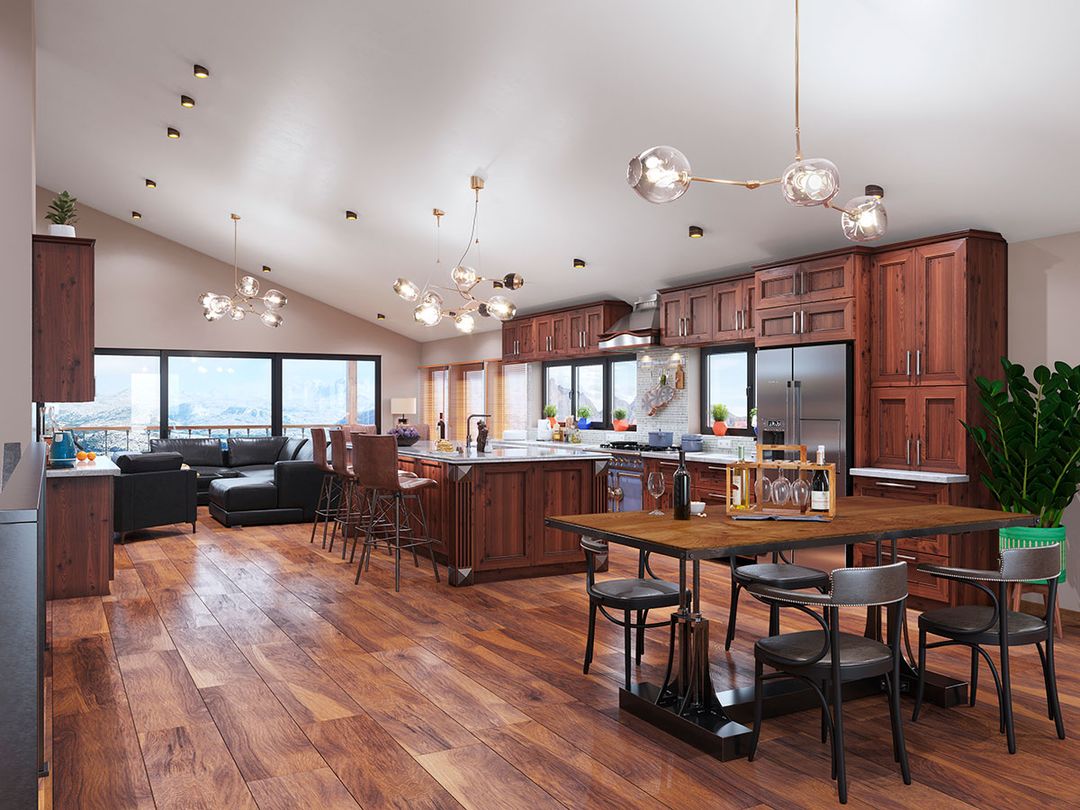
This is the concept most owners haven't heard, and it matters more than any finish decision.
Every neighborhood has a price ceiling set by what comparable homes sell for. Push your home too far above that ceiling and the market simply doesn't follow you up. A common rule of thumb: be cautious once your home would exceed roughly 120% of the median comparable in its immediate area.
What that means practically:
Before scoping a major kitchen, it's worth a conversation with an agent who knows your specific pocket of Park City. That's a fifteen-minute call that can reshape a six-figure decision.
National return figures assume a primary residence sold to a local buyer. A large share of Park City properties aren't that.
If the home is a second property, the return is measured in use. You're buying twenty ski seasons of a kitchen that works when twelve people descend on it, not a resale percentage.
If the home is rented, the kitchen affects nightly rate, occupancy, and review scores in ways that compound annually. A kitchen that photographs well and handles a full house is a revenue asset. That return often outpaces the resale number substantially, and it starts immediately.
If the home is on the market soon, the calculus is different again. A dated kitchen extends days on market and invites price negotiation. Here, a targeted refresh usually beats a full custom build — you're removing an objection, not creating a showpiece.
Which of these you are should determine the scope. It usually doesn't, and that's where money gets wasted.
Not everything expensive registers.
Tends to register:
Tends not to register:
That last one is worth underlining. Unpermitted work shows up during diligence and turns into a credit request at the worst possible moment. We cover why in our guide to what a Utah remodeling contract must cover.
A few patterns we see repeatedly:
Ask how long you're staying.
Selling within two years? ROI is the right frame. Scope conservatively, fix what's dated, don't build a showpiece.
Staying five years or more? The resale percentage matters much less than the fact that you'll use this room several times a day for years. Most of our clients are in this group, and for them the honest answer is that the kitchen is a lifestyle purchase with a partial financial recovery attached.
Both are legitimate. Confusing one for the other is how budgets go sideways.
We'll tell you if we think a scope is over-built for the neighborhood. That conversation costs us work sometimes. It's still the right call.
Mike and Peter Karniayenka run every project personally, and every design goes through full 3D review before anything is ordered — which is where scope and budget decisions are still free to change.
See completed Park City work in our portfolio, or explore our kitchen remodeling services.
A major upscale kitchen remodel typically recoups 40 to 55% of its cost at resale. Smaller, cosmetic remodels recoup a higher percentage because the spend is lower relative to the improvement buyers perceive.
Yes, but rarely by the full amount spent. It also affects how quickly a home sells and how much negotiating room a buyer has, which doesn't show up in a recoup percentage.
Buyers pay based on comparable homes in the neighborhood. Past a certain point, additional spend stops translating into additional market value, no matter how good the work is.
The practical price limit set by comparable sales nearby. Improving a home well beyond that ceiling generally doesn't return proportionally. A local agent can tell you where yours sits.
Considerably. For a rented property, a kitchen affects nightly rate, occupancy, and reviews every season. That return compounds annually and begins immediately, rather than waiting for a sale.
If the kitchen is dated, a targeted refresh usually beats a full custom remodel. You're removing a buyer objection, not building a showpiece. If you're staying five or more years, scope for how you'll live instead.

Begin your transformation with a free estimate from Renovation Brothers today!

Skilled home remodelers in Utah, creating personalized, high-quality renovations for every home.
License No.: 10884505-5501
Ready to start?
Request a quote