Most exterior projects fail on the things nobody inspects, not the things clients worry about. After fifteen years in Salt Lake City, here is how we assess a home before we touch it.
Nearly every client begins the conversation at the end of it, with a paint color or a siding profile they have been saving. We understand the instinct, because the exterior is what you see every time you pull into the driveway.
But we think about it structurally first. Before any finish, we read the building envelope: the sheathing behind the siding, the flashing at every transition, the moisture barrier, the roofline, and the way water moves away from the foundation. That is what an exterior home assessment is really for, especially on the older homes in the Avenues and east-side neighborhoods, where what sits behind the siding predates modern moisture detailing.
This is why the envelope is where we start every assessment: it decides whether the finishes above it are protecting anything or just decorating a problem. A wall can look flawless from the street and be failing behind the panel, and that gap between how it looks and how it is holding up is the single thing this exterior renovation checklist is built to catch.
We do not install roofing ourselves, but we assess it as part of the envelope and coordinate around it, since siding and roofline decisions cannot be made in isolation.

This exterior renovation checklist is what we run on a first walkthrough, and what each pass looks for. Read it as how we think, not as chores to work down on your own. Each item is a judgment call in its own right, cosmetic or structural, repair or replace, ready or not, and the walkthrough is where we make them.
Repair or replace is the most expensive judgment call on the exterior, and the one clients most often get wrong on their own. Siding that looks tired can be structurally sound, and siding that looks fine can be holding moisture behind it. Here is how we make that call.
When we stand in front of a wall, these are the five things we read. Any one of them can move a wall from patch-the-run to replace-it.
The answer to when to replace siding is rarely about age. It is about how many of these five a wall shows at once, and reading them together, rather than reacting to any one, is the difference between a repair that holds and a repair that just resets the clock.
Once replacement is the call, material is where the project is won or lost. For most homes we specify fiber cement, most often James Hardie, with engineered wood where a warmer look is the goal and the detailing is done right. The full case for why these outlast vinyl in our climate is a longer story than it belongs here, and we lay it out in our Utah climate exterior guide.
Clients notice windows the same way every time: a draft on a cold morning. The draft is real, but it is a symptom of something we look past to find what you cannot see.
Those signs windows need replacing are what we surface in the estimate, not mid-project, because a window opening is a common place we find damage a client never knew was there. For clients weighing replacement windows in Salt Lake City as part of a larger scope, we fold that into the full walkthrough.
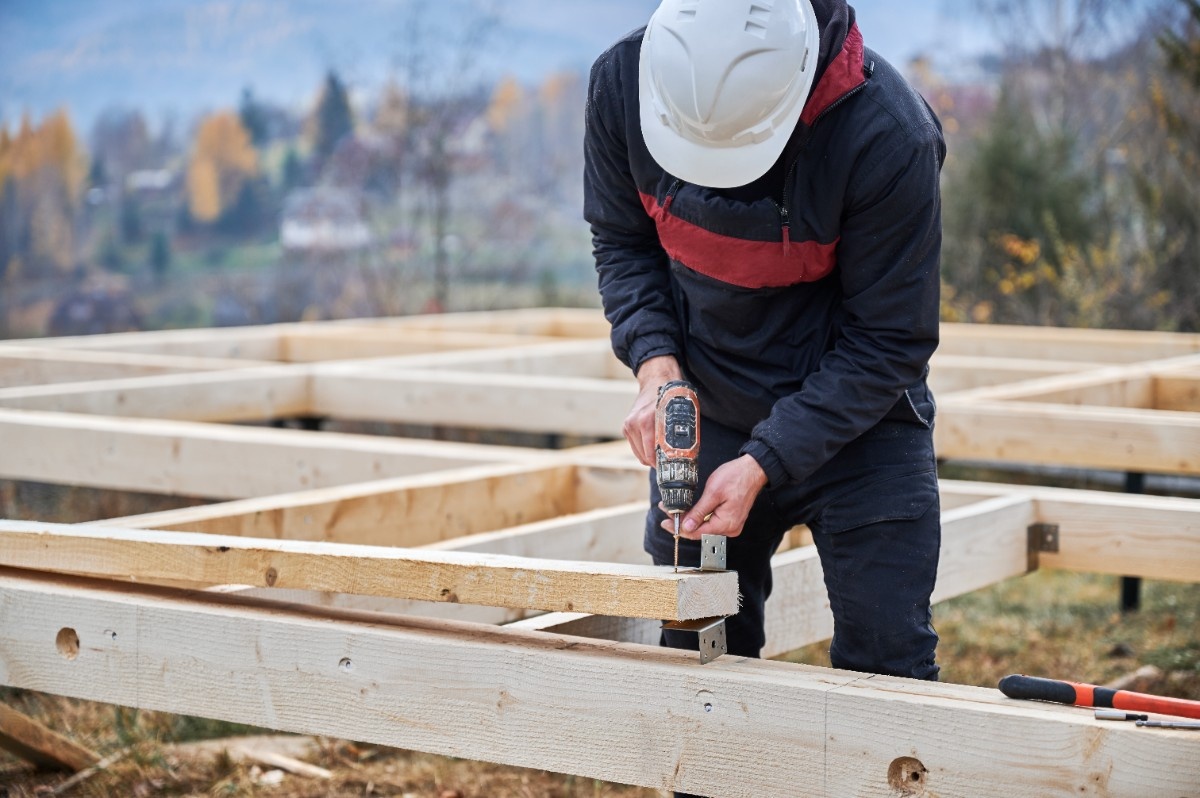
A deck is where the gap between how something looks and how sound it is runs widest. Weathered boards can sit on a solid structure, and a fresh stain can hide a failing connection.
That is the honest answer to deck repair vs replace: if the surface is worn but the structure passes, you resurface and save. If the structure fails, refinishing only hides the problem. When a full rebuild is the right call, our deck and outdoor living work is engineered for the snow loads our winters actually deliver.
Nearly everyone wants a heated driveway after watching a Salt Lake City winter bury theirs. The city averages over fifty inches of snow a year, and a heated system ends the shoveling and keeps the approach safe all season. The desire is never the hard part.
The real question is whether your home can carry it. A heated driveway is a significant load, and the first thing we evaluate is whether your electrical service and panel are ready, or whether the project needs an upgrade. That heated driveway electrical panel requirement is the conversation most people never have until they are already committed.
Because load and surface both matter, radiant heated driveway installation is designed alongside the driveway itself, not bolted on after. On heated driveway cost in Utah, the figure moves with size, system type, and whether an electrical upgrade is in scope, which is why we price it against your property. These systems are popular in Holladay, Draper, and the north-facing bench neighborhoods where snow lingers longest.
Lighting is the element clients most want to decide first and the one we ask them to decide last. Its placement and wiring depend on decisions above it on this list: where the new siding lines fall, how the entry is reworked, what the deck footprint becomes.
There is also a practical reason to sequence it late. A full exterior lighting plan adds real electrical load:
On the older homes across the Avenues and east-side neighborhoods, that combined draw lands on a panel that may already be near capacity, the same constraint we flag for heated driveways. Settle the envelope, siding, and entry first, and the lighting plan almost designs itself.
Cost is the question every client wants answered first and the one that depends most on everything above. For premium homes across Salt Lake City's higher-end neighborhoods, the Avenues, Holladay, and Draper among them, exterior work is rarely a single line item. It is usually part of a larger renovation, and what moves the number is:
For context, a complete luxury renovation in these neighborhoods commonly runs from $150,000 to $400,000 and up, and the most extensive whole-home projects can exceed $500,000. Exterior scopes land within that range depending on how much you take on at once. Rather than quote a flat number that will not hold, we itemize every trade and material before work begins, so the exterior renovation cost you see is the one you actually pay.
For per-project cost ranges on individual work like siding, windows, and decks, our exterior remodeling page breaks those down, and you can see how a full-scope renovation comes together on our whole house remodel page.
Everything on this exterior renovation checklist comes together in the first walkthrough. When we assess a home in person, we:
This is also where we identify whether the exterior stands alone or connects to a larger plan, an addition that changes the exterior footprint, or a full renovation where outside and inside are designed together. Our process page lays out every step. For clients planning exterior remodeling in Salt Lake City, that walkthrough is where the guesswork ends.
Every exterior renovation checklist we run comes back to one idea: most of what determines whether a project succeeds is decided before any work starts, in what gets caught and what gets missed. The cosmetic problems announce themselves. The expensive ones, the moisture behind a sound-looking wall, the deck connection that was never right, the panel that cannot carry the load, stay hidden until someone looks for them on purpose. That looking is the work, and it is what fifteen years on Salt Lake Valley homes has taught us to do well.
When you are ready to have your own exterior assessed the way we have described here, Renovation Brothers would be glad to walk it with you. Contact us for consultation and we will start with the right question.
The building envelope, always. That means the sheathing, flashing, moisture barrier, roofline, and drainage, before any siding profile or paint color. The finishes only last if what sits behind them is sound, so we assess protection first, performance second, and appearance last.
We look at five signs: freeze-thaw cracking across multiple boards, moisture trapped behind the panel, UV warping and uneven fade, a wall that will no longer hold paint, and rot that has spread beyond a single board. One isolated issue is usually a repair. Several at once, especially with hidden moisture, means replacement. The call is about how many signs show together, not the age of the siding.
Envelope repairs come first, because siding, windows, and trim all depend on sound sheathing and flashing beneath them. Structural deck work follows, then the driveway and any electrical upgrades, then lighting and finish details last. Doing it in this order means no trade has to undo another's work, which is where budget and timeline usually slip.
As a whole, premium exterior renovations here typically fall within the range of a larger home renovation, from $150,000 into the $400,000s, and higher for the most extensive projects. Individual pieces like siding or a deck are better estimated on their own; our exterior remodeling page breaks those per-project ranges down. Either way, we itemize every line before work starts.
Most often, moisture damage behind siding that looked fine from the street, failed flashing at window and roof transitions, and deck ledger connections that were never properly attached or sealed. Finding these during the assessment is the entire point, because they change the scope, and discovering them mid-project is what turns a fixed budget into a moving one.
That is the first thing we check. A heated driveway is a meaningful electrical load, and not every panel is sized to carry it as-is. We assess your service and panel capacity early, so if an upgrade is needed, it is part of the plan and the budget from the start rather than a surprise.
Yes. We inspect the ledger connection, the joists, the posts and footings, and the deck's snow-load capacity. If the surface is worn but the structure passes, you resurface and save. If the structure fails, refinishing it only hides the problem, so we tell you before you spend rather than after.
If the projects touch the same walls or systems, together almost always wins. Replacing siding and windows in one pass means one flashing plan, one crew, and no seams where a later project has to cut into finished work. Standalone projects, like a deck that shares no wall with other work, can be sequenced separately without penalty. The assessment is where we sort which is which.

Begin your transformation with a free estimate from Renovation Brothers today!

Skilled home remodelers in Utah, creating personalized, high-quality renovations for every home.
License No.: 10884505-5501
Ready to start?
Request a quote


